Pottermore Publishing and Worldreader Scale Digital Reading in Kenya via M-PESA — Targeting One Million Families by 2030
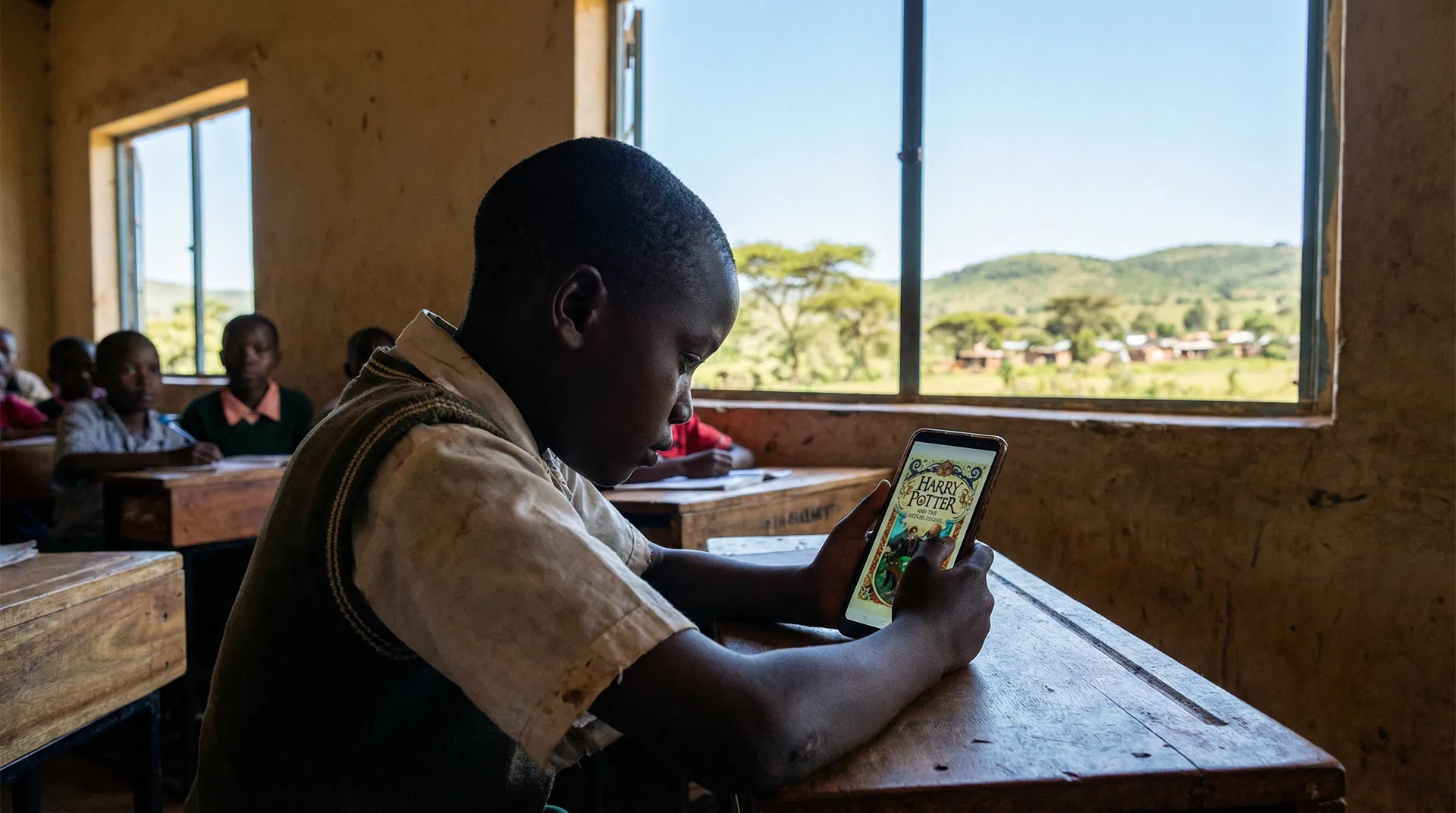
Pottermore Publishing and Worldreader have launched a new series of Harry Potter and the Philosopher's Stone Reading Challenges in Kenya as part of the five-year 'Get Kenya Reading' initiative, targeting one million families by 2030. The BookSmart app is integrated directly into the Safaricom M-PESA App's 'Education' section, providing access to over 2,700 books in English and Kiswahili. Harry Potter and the Philosopher's Stone is available free until June 2026. The programme addresses a literacy gap where 80% of Kenyan 10-year-olds struggle to understand simple stories. A Reading Champions Tea Party in Nairobi recently honoured 300 young readers who completed the first book.
Analysis
The Pottermore–Worldreader partnership in Kenya is a model of what premium IP-led digital literacy initiatives can look like when they are built around the infrastructure that people already use, rather than the infrastructure that publishers wish they would use.
The key architectural decision here is the integration of the BookSmart app into the Safaricom M-PESA App's "Education" section. M-PESA is not a reading app or an educational platform — it is Kenya's dominant mobile money service, used by an estimated 30 million Kenyans for everything from paying bills to receiving wages. By embedding the reading programme inside an app that Kenyan families already open regularly for financial transactions, the initiative sidesteps the single biggest barrier to digital literacy programmes in emerging markets: the discovery and adoption problem. Parents do not need to seek out a new app, create a new account, or remember a new login. The books are where the money is.
The scale of the literacy challenge being addressed is stark. Eighty percent of Kenyan 10-year-olds struggle to understand simple stories — a figure that reflects not a lack of motivation or intelligence, but a systemic deficit of access to books and reading materials. The "Get Kenya Reading" initiative's goal of reaching one million families by 2030 is ambitious, but the M-PESA integration gives it a distribution infrastructure that no standalone reading app could replicate.
The choice of Harry Potter as the flagship title is commercially and culturally deliberate. The series has demonstrated, across multiple languages and markets, an unusual ability to create habitual readers — children who finish one book and immediately want the next. The Reading Champions Tea Party model, which honoured 300 young readers who completed the first book, is a smart piece of community-building that turns individual reading achievement into a social event. The donation of physical paperback copies by Bloomsbury Publishing UK adds a tactile reward that reinforces the connection between digital access and physical books.
For publishers thinking about emerging markets, the most transferable insight from this initiative is the super-app integration model. Safaricom M-PESA is not unique — similar mobile money and super-app ecosystems exist across sub-Saharan Africa, South and Southeast Asia, and Latin America. The question for publishers with global IP is whether they are willing to invest in the partnership development and localisation required to embed their content in the platforms that hundreds of millions of people already use every day.