Hachette Cancels Shy Girl Across Both Orbit and Wildfire — The Big Five's First Full AI Cancellation
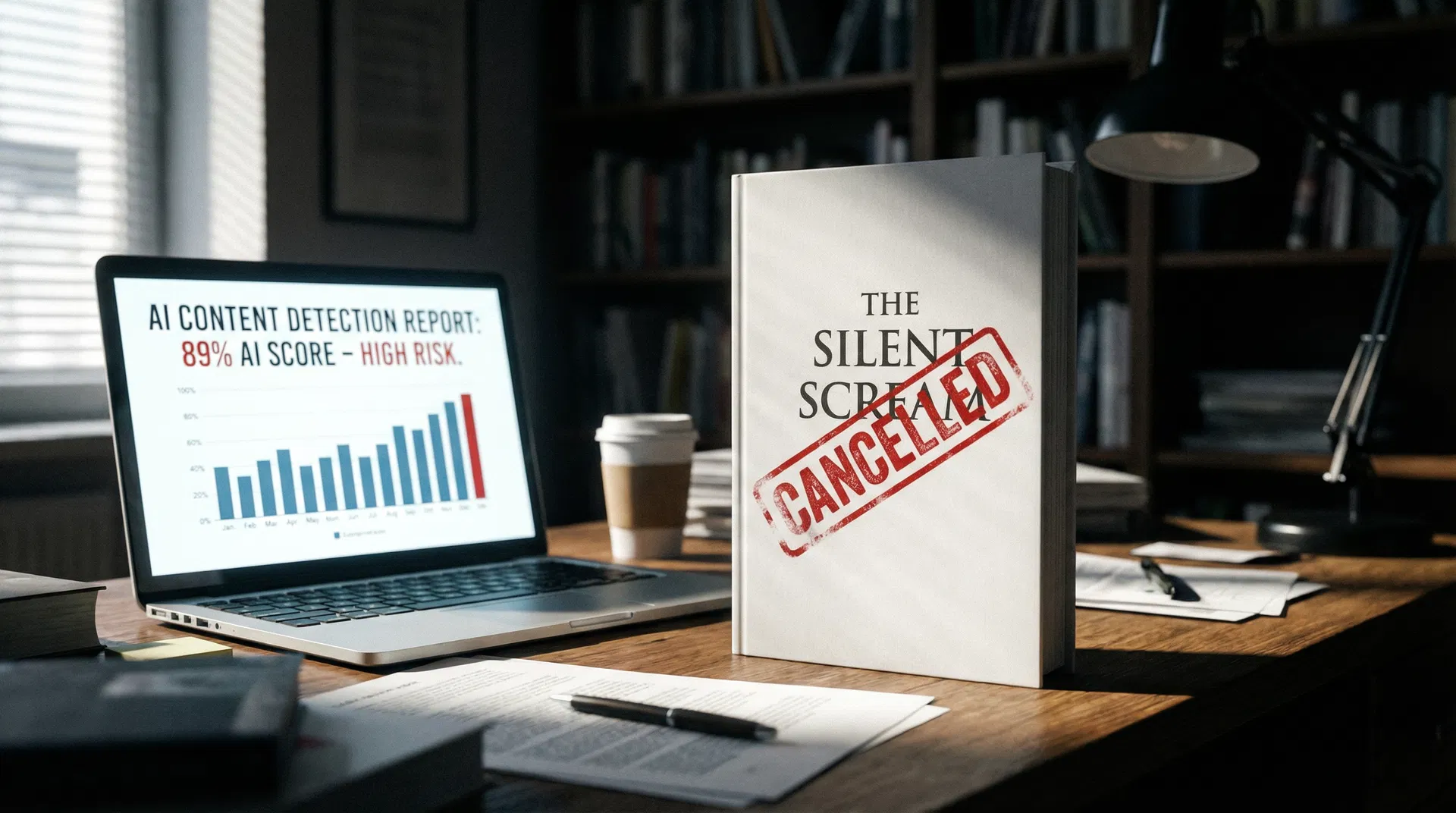
Hachette Book Group has cancelled Mia Ballard's horror novel Shy Girl across both its US imprint Orbit and its UK imprint Wildfire, following a New York Times investigation that presented evidence of AI-generated text. The book — originally self-published in February 2025 and acquired after going viral on TikTok — was found by AI detection firm Pangram to be 78% AI-generated. Ballard denies personally using AI, claiming an editor she hired for formatting may have introduced the content without her knowledge. The book had sold approximately 1,800–2,000 copies in the UK before being pulled.
Analysis
The full cancellation of Shy Girl across both Hachette's Orbit and Wildfire imprints marks a new threshold in the publishing industry's response to undisclosed AI use — and the circumstances of this case are more instructive than any single policy statement could be.
The book's trajectory is now a case study in the vulnerabilities of the "self-pub to traditional" acquisition pipeline. Shy Girl was originally self-published in February 2025, went viral on TikTok, attracted significant reader enthusiasm, and was acquired by two Hachette imprints on the strength of that organic momentum. The editorial scrutiny applied to a previously published, already-popular book is, by industry convention, considerably lighter than that applied to an original manuscript. Publishers acquiring self-published works are, in effect, buying a proven audience rather than an unproven text — and that commercial logic has historically reduced the incentive to interrogate the text itself.
The NYT investigation changed that calculus. By presenting forensic evidence of AI-generated passages — corroborated by Pangram's 78% AI-generation score — the newspaper effectively forced Hachette's hand. The publisher's statement affirming its commitment to "protecting original creative expression" is the correct public position, but it also implicitly acknowledges that the acquisition process did not catch what a forensic review subsequently found.
Mia Ballard's response — that she did not write the AI content herself, but that an editor she hired for formatting introduced it without her knowledge — is legally and commercially significant. If true, it creates a chain of responsibility that runs from a third-party contractor through the author to the publisher, raising questions about who bears liability for the content of a published work when the author's own editorial process is outsourced. If false, it is a sophisticated attempt to maintain plausible deniability while shifting blame to an unnamed third party who cannot easily be verified or cross-examined.
What is clear is that this case — the third major Shy Girl story in the DPT archive, following the initial NYT investigation and Hachette's earlier confirmation — has now reached its commercial conclusion. The book is cancelled, the author's reputation is damaged, and the industry is left with a structural question it has not yet answered: at what point in the acquisition process should AI screening become mandatory, and who pays for it?