Music Publishers File for Summary Judgment Against Anthropic — 'Copyright Infringement on a Massive Scale'
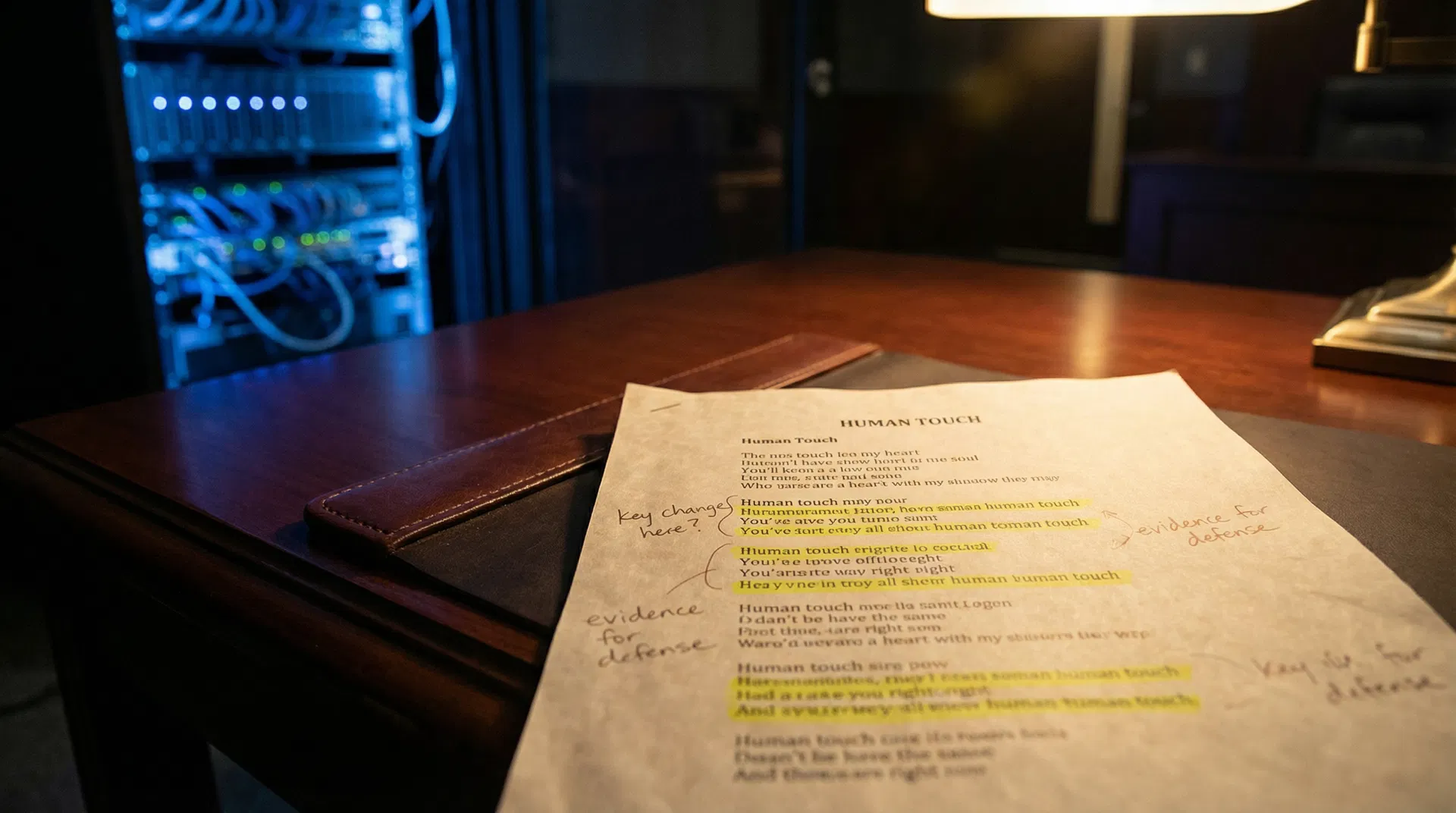
Universal Music Group, Concord, and ABKCO have filed a motion for summary judgment in San Jose federal court, asking a judge to rule that Anthropic's use of copyrighted song lyrics to train its Claude AI model constitutes copyright infringement 'on a massive scale.' The filing argues that Claude produces AI-generated lyrics that serve as market-diluting derivatives of the originals, directly challenging the tech industry's standard fair use defence. The case involves lyrics from at least 500 songs by artists including the Beach Boys, the Rolling Stones, and Beyoncé. A separate lawsuit by BMG against Anthropic was filed one week earlier.
Analysis
The music publishers' motion for summary judgment against Anthropic is the most direct legal challenge yet to the fair use defence that has underpinned the AI industry's approach to training data — and its timing, coming just days after the White House reaffirmed its support for AI fair use, is not coincidental.
The motion's central argument is architecturally different from the class-action approach that has dominated AI copyright litigation. Rather than seeking damages for past infringement and moving on, UMG, Concord, and ABKCO are asking a federal judge to rule, as a matter of law, that Anthropic's training practices constitute infringement — full stop. A successful summary judgment motion would remove the question from the jury and establish a legal precedent that would immediately apply to every other AI company using similar training methods.
The publishers' framing is also strategically significant. By arguing that Claude's AI-generated lyrics are "derivatives" that dilute the market for original works, they are directly engaging with the fourth factor of the fair use analysis — the effect on the potential market for the copyrighted work. This is the factor that courts have historically treated as the most important, and it is the one where the publishers' argument is strongest. If an AI model can generate a passable imitation of a Rolling Stones lyric on demand, the market for licensed uses of that lyric is genuinely diminished.
The context of the $1.5 billion Bartz v. Anthropic settlement — which awarded approximately $3,000 per copyrighted work to book authors — is relevant here. The music publishers are implicitly arguing that $3,000 per work is not an adequate remedy for the scale of infringement involved, and that a summary judgment ruling would give them a stronger negotiating position than a settlement reached under the shadow of litigation uncertainty.
For book publishers watching this case, the most important question is whether the "market dilution" argument for lyrics translates to prose. Song lyrics are short, highly distinctive, and frequently reproduced verbatim by AI models in ways that are easy to demonstrate. Long-form prose is harder to prove in the same way. But the legal theory — that AI-generated content competes with and devalues the original — applies equally to both, and a ruling in the music publishers' favour would almost certainly accelerate similar motions in the book copyright cases currently working their way through the courts.