Jane Friedman Publishes Definitive AI Law FAQ for Authors — Navigating Copyright, Contracts, and the Lawsuit Landscape
Jane Friedman has published a comprehensive AI Law FAQ for Authors at janefriedman.com, covering copyright protection for AI-assisted work, the current lawsuit landscape, contract negotiation strategies, and emerging risks including pirate AI translations. The guide synthesises the Bartz v. Anthropic fair use ruling, the US Copyright Office's position on AI-generated content, the Authors Guild's recommended contract terms, and Bill Rosenblatt's warning that 'we're in for a good solid decade of uncertainty.' It is the most comprehensive practical legal guide for authors published since the AI copyright debate began in earnest.
Analysis
Jane Friedman's AI Law FAQ is not a legal document, but it may be the most practically useful thing published for authors in the current AI copyright moment. It does what the legal community has largely failed to do: translate the accumulated case law, regulatory guidance, and contractual practice of the past three years into a framework that a working writer can actually use.
The most important clarification in the guide concerns the distinction between "AI-assisted" and "AI-generated" work. Under current US law, human authors can claim copyright for the creative selection, coordination, or arrangement of AI-generated material — but not for the AI-generated text itself. Prompting an AI, regardless of how sophisticated or iterative the prompting process, does not constitute legal authorship. This distinction has enormous practical implications for authors who use AI tools in their workflow: the question is not whether they used AI, but whether the final work contains sufficient human creative expression to be copyrightable.
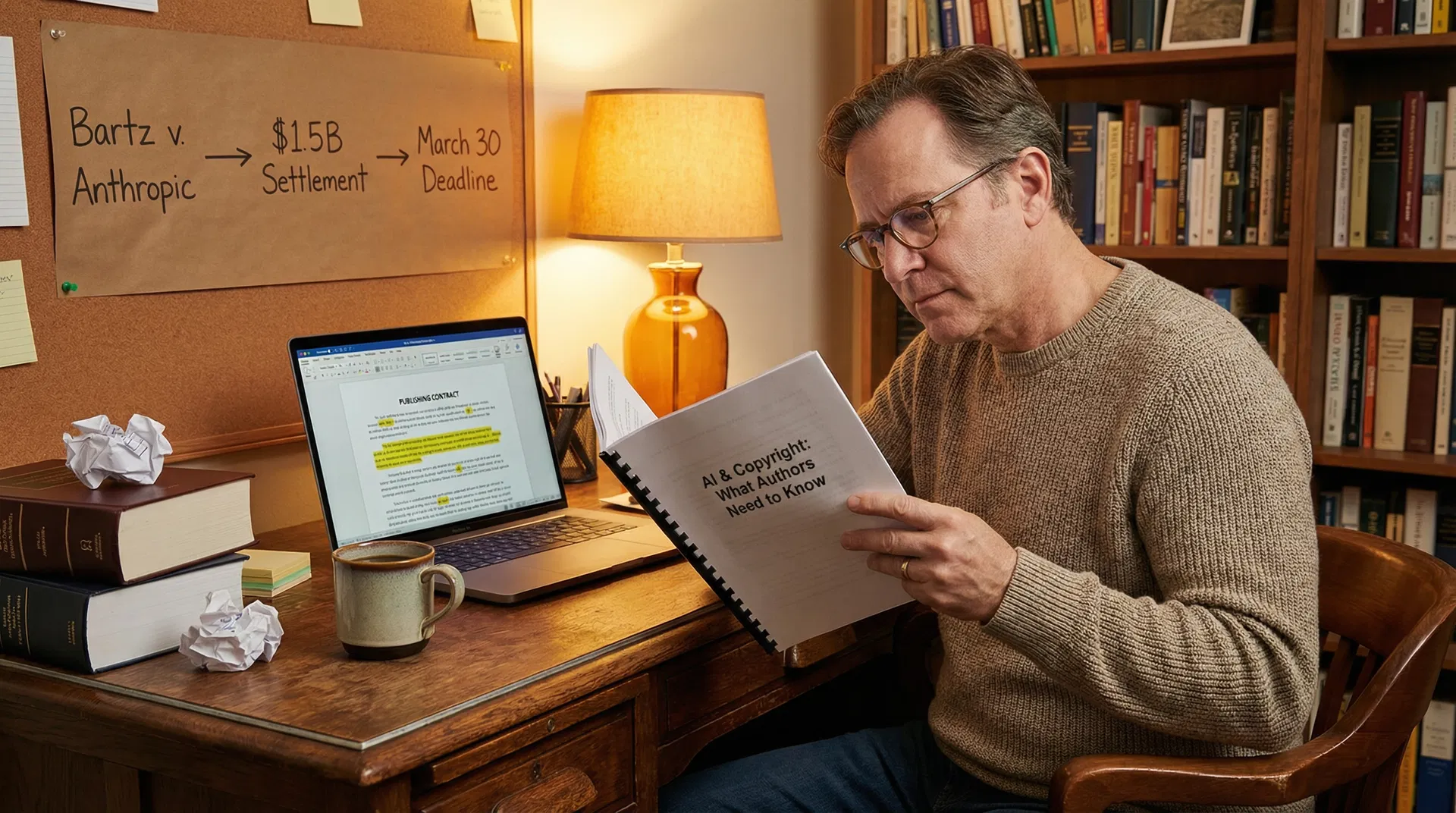
The Bartz v. Anthropic section is particularly valuable for context. Judge Alsup's finding that training on copyrighted books is "spectacularly transformative" fair use — and the subsequent $1.5 billion settlement — establishes a baseline that is simultaneously reassuring and alarming. Reassuring, because the settlement created a precedent for compensation at scale. Alarming, because the settlement created no ongoing licensing scheme: authors who missed the March 30 claims deadline received nothing, and the ruling does not prevent future AI companies from training on copyrighted works without compensation.
The Authors Guild's recommended contract terms — a 75-85% revenue split in favour of authors for AI training licences — are a useful anchor for negotiations, though Friedman notes that publishers typically offer 50-50 splits. The gap between those positions reflects the broader power asymmetry in the author-publisher relationship, and the guide is honest about the limits of what individual authors can achieve in contract negotiations without collective action.
Bill Rosenblatt's warning that "we're in for a good solid decade of uncertainty" is the most honest summary of the current situation. The guide does not promise clarity. What it offers instead is a map of the terrain — which questions have been partially answered, which remain open, and which will not be resolved until the courts have worked through the full stack of pending litigation. For authors trying to make decisions about their work and their contracts right now, that map is invaluable.