LBF 2026: 'Rather Have a Bad License Than No License' — Publishers Urged to Enter AI Licensing Market
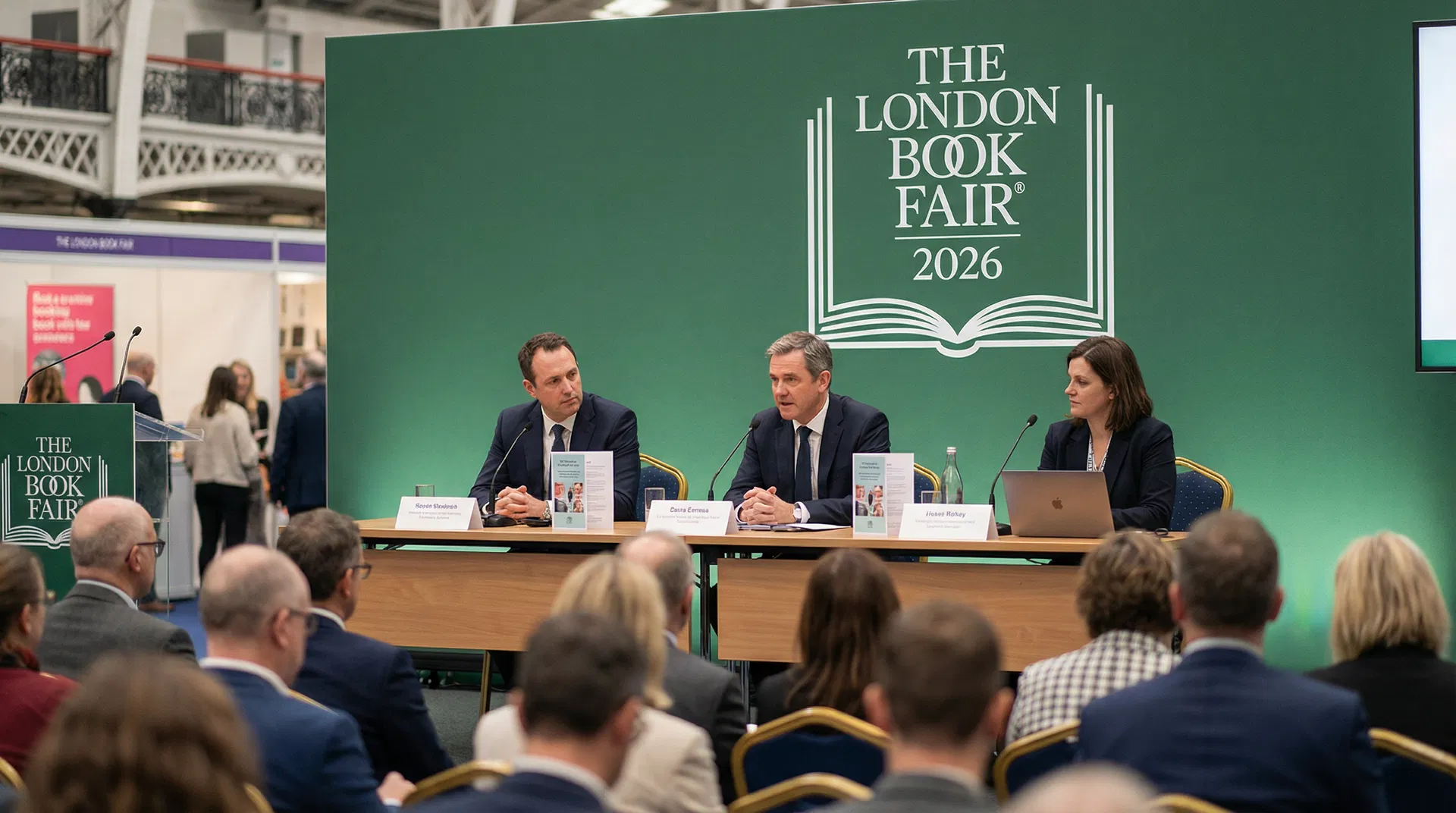
A panel at the London Book Fair titled 'Publishing Revenue Diversification Through Rights Licensing,' moderated by Roy Kaufman of the Copyright Clearance Center, urged publishers to actively enter the AI licensing market rather than waiting for litigation to resolve. The Publishers Association's 'Content Superpower' report found that the number of publishers active in the AI licensing market is set to double in 2026, with Retrieval-Augmented Generation (RAG) licensing now a meaningful and growing segment.
Analysis
The most practically urgent advice delivered at the London Book Fair this year may have come not from a keynote stage but from a panel in one of the fair's smaller conference rooms. 'Rather have a bad license than no license. Don't be precious,' said Roy Kaufman, Managing Director of Business Development at the Copyright Clearance Center, moderating the 'Publishing Revenue Diversification Through Rights Licensing' session. It was the kind of blunt commercial counsel that the publishing industry — which has a tendency toward principled paralysis on AI questions — needed to hear.
The context for Kaufman's advice is the Publishers Association's 'Content Superpower: UK publishing and the AI licensing market' report, released the same week. The report documents something that has been happening quietly beneath the surface of the AI copyright litigation: a growing number of publishers have been licensing their content for text and data mining (TDM) for nearly a decade, and that infrastructure is now being extended to cover Retrieval-Augmented Generation (RAG) — the technique by which AI systems retrieve and synthesize information from licensed databases rather than relying solely on training data. The number of publishers active in this licensing market, which already includes all major academic publishers, is set to double in 2026.
Caroline Cummins of the Publishers Association made the strategic logic explicit: if publishers do not participate in the licensing market, they will have no bargaining chips when the terms of AI content use are eventually negotiated at scale. The parallel with the music industry's experience is instructive — streaming royalties were shaped by who was at the table when the deals were struck, and those who held out entirely found themselves with less leverage, not more.
The PLS (Publishers' Licensing Services) collective licence for AI use, developed with the Copyright Licensing Agency and the Authors' Licensing and Collecting Society, represents the most structured attempt yet to create a pathway for publishers of all sizes — not just the major houses — to participate in this market. The collective licensing model has the advantage of aggregating negotiating power across the industry rather than leaving individual publishers to negotiate bilateral deals with AI companies from positions of unequal strength. For smaller publishers in particular, it may be the only realistic route to participation. The question of whether the terms will be adequate is open; the question of whether participation is preferable to absence is not.