London Book Fair 2026 Wrap: 'Reading Crisis Is a Greater Threat Than AI,' Says Pan Macmillan CEO
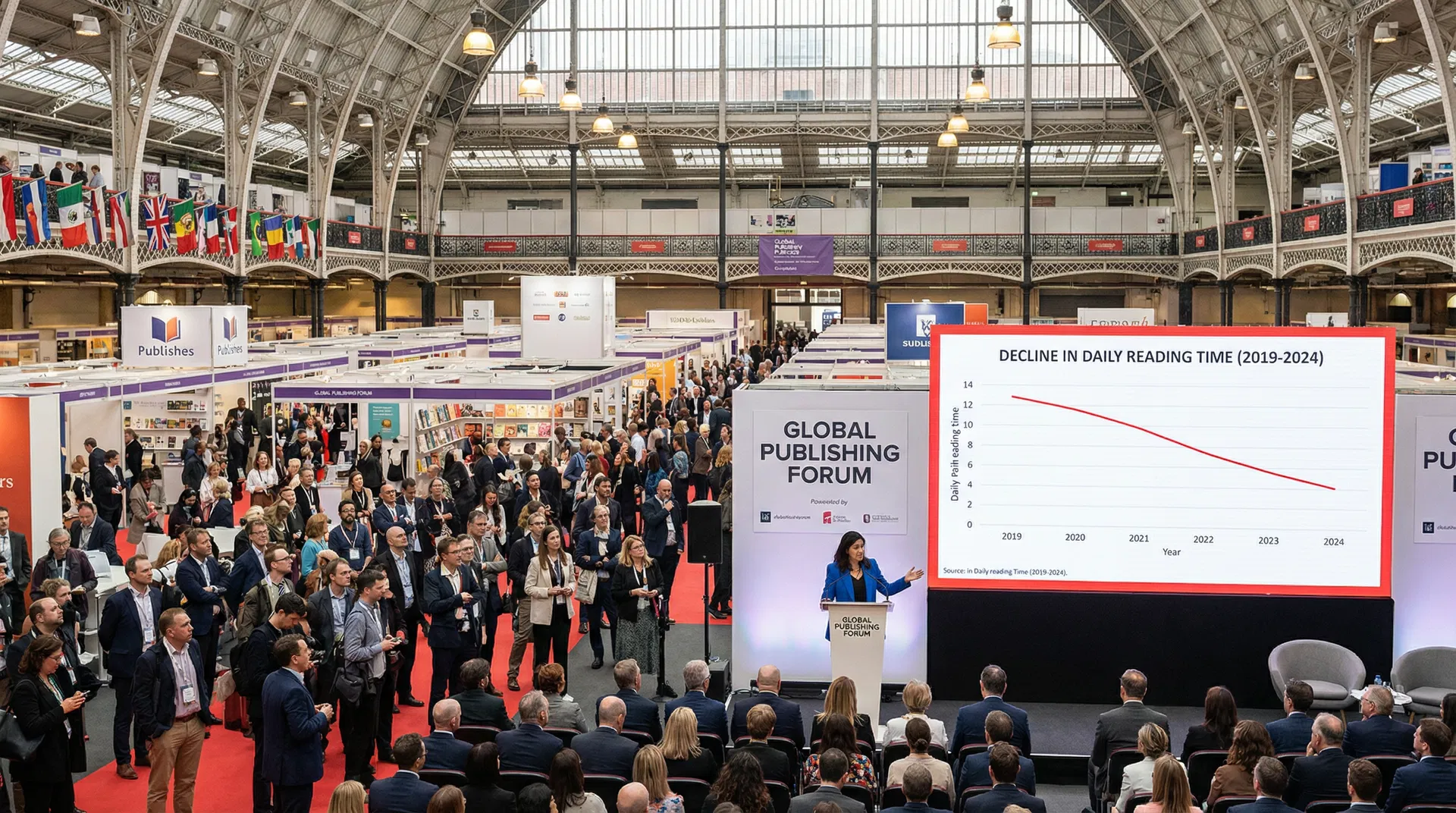
The 2026 London Book Fair concluded with a striking consensus among industry leaders: the global reading crisis — not artificial intelligence — is the defining challenge facing publishing. Pan Macmillan CEO Joanna Prior delivered a keynote arguing that declining literacy and reading habits represent a greater existential threat than AI disruption. PRH UK CEO Tom Weldon called on the industry to be less 'preachy' about reading rates and more focused on making books feel 'as urgent as notifications.' English PEN announced it has awarded over £1 million in translation grants to date, supporting 400 books. The fair drew 33,000 visitors and was characterised by a confident, high-energy atmosphere, with strong activity in graphic storytelling, comics, and international rights.
Analysis
The London Book Fair has always functioned as a barometer of the industry's collective mood, and the 2026 edition sent a signal that is both clarifying and, in its way, provocative. After two years in which AI dominated every panel, keynote, and corridor conversation, the most prominent voices at Olympia this year chose a different theme: the crisis of reading itself.
Joanna Prior's keynote was the most direct statement of this position. The Pan Macmillan CEO's argument — that declining literacy and reading engagement represent a greater threat to publishing than AI could ever be — is not a dismissal of AI risk. It is a reordering of priorities. AI, in this framing, is a tool that the industry can adapt to and, in some cases, benefit from. A world in which fewer people read is a world in which the entire value chain of publishing — from author to agent to publisher to bookseller — loses its foundation. That is a different kind of threat, and one that no licensing deal or copyright settlement can address.
Tom Weldon's contribution was characteristically blunt. The PRH UK CEO's call for the industry to be less "preachy" about reading rates reflects a genuine tension in how publishers communicate with the public. The instinct to lecture — to position reading as morally superior to other forms of entertainment — has not demonstrably increased readership, and may have contributed to the perception of books as a category for a particular kind of person rather than a universal pleasure. Making books "as urgent as notifications" is a different ambition: it requires understanding why people reach for their phones rather than their bookshelves, and designing products, formats, and discovery experiences that compete on those terms.
The bibliodiversity theme that ran through the fair's programming is the structural complement to these individual statements. English PEN's milestone of £1 million in translation grants, supporting 400 books, represents a sustained investment in the proposition that the global diversity of literary voices is itself a commercial and cultural asset. The significant rise in graphic storytelling and comics at the fair — even without the dedicated Comic Space that had been planned — reflects a broader recognition that the boundaries between "books" and other visual narrative forms are less meaningful to readers than they are to publishers.
The 33,000 attendance figure, the confident deal-making atmosphere, and the absence of the existential anxiety that characterised the 2024 and 2025 fairs suggest that the industry has, to some degree, made its peace with AI as a present reality. The question it is now asking itself is harder: how do you make reading matter to people who have never formed the habit?