Scholastic Fiscal Q3 2026: Revenue Misses Forecasts but EPS Beats on Book Fair Strength
Scholastic reported fiscal Q3 2026 revenue of $329.1 million, a 2% year-on-year decline that missed analyst forecasts, but adjusted EPS of -$0.15 significantly beat the consensus estimate of -$0.37. The Book Fairs division rose 2% to $113.3 million, driven by higher revenue per fair. The company completed over $400 million in sale-leaseback transactions and authorised a $200 million Dutch auction tender offer, signalling a decisive shift toward an asset-light model.
Analysis
Scholastic's fiscal third quarter is structurally its weakest — the period between the holiday season and the spring book fair surge — so a revenue miss against forecasts is less alarming than it might appear in isolation. The more important number is the EPS beat: -$0.15 against a consensus of -$0.37 is a significant outperformance that reflects genuine progress on cost control and structural transformation.
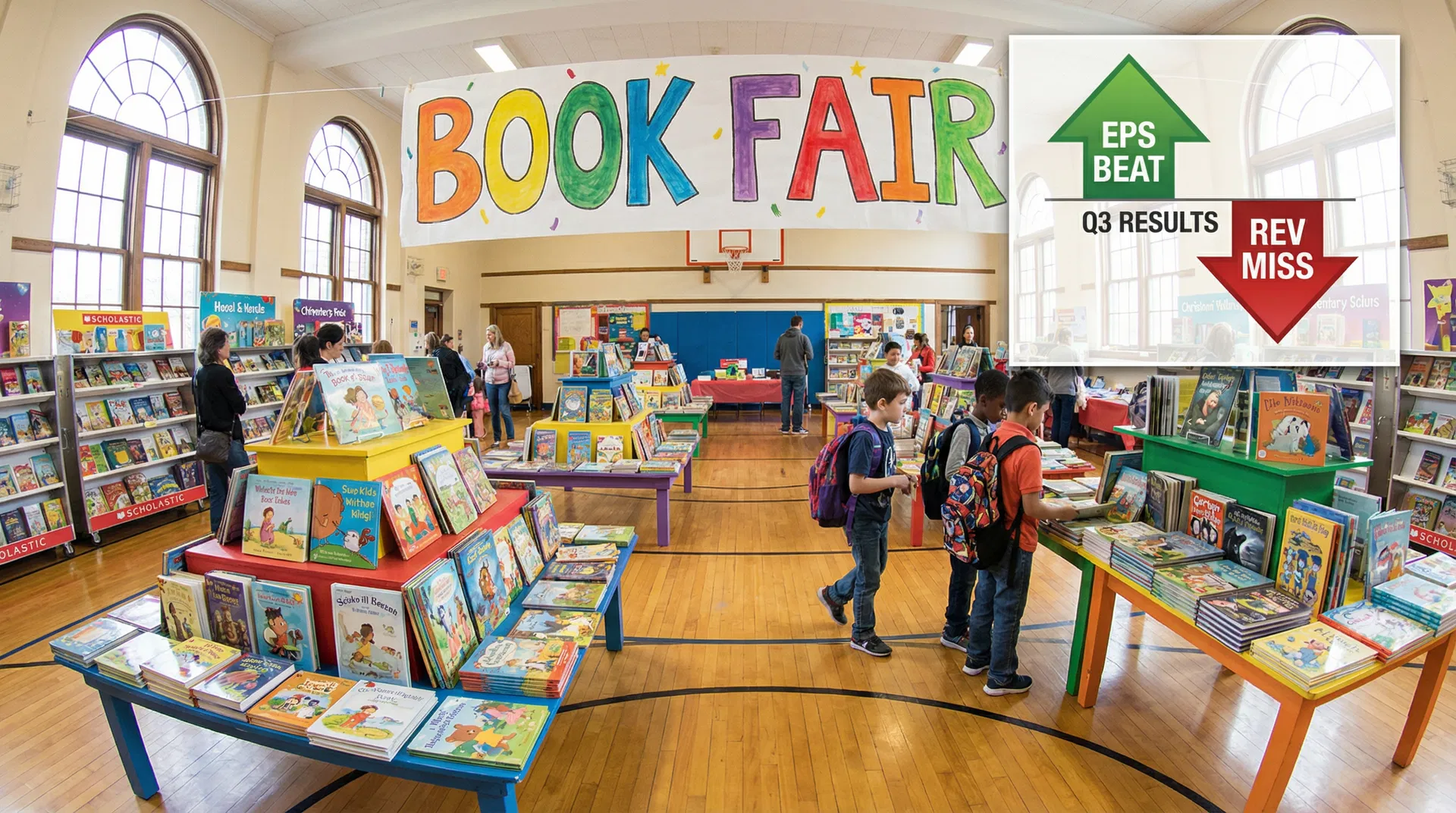
The Book Fairs division continues to be the company's most reliable engine. A 2% revenue increase to $113.3 million, driven by higher revenue per fair rather than volume growth, suggests that the division has successfully shifted its model toward premium curation — fewer, better-stocked fairs generating more revenue per event. This is a defensible strategy in an environment where school administrators are increasingly selective about which vendors they allow on campus.
The balance sheet transformation is the most strategically significant development in this quarter. Over $400 million in sale-leaseback transactions has converted Scholastic from a net debt position of $189.4 million to a net cash position of $90.6 million — a swing of nearly $280 million. Combined with the $200 million Dutch auction tender offer, this represents a fundamental reorientation of the company's capital allocation priorities. Scholastic is telling investors that it intends to return capital aggressively rather than reinvest in owned real estate, which is a rational response to a market where physical assets are less strategically valuable than content and distribution relationships.
The Entertainment segment's 25% revenue surge to $16.0 million, driven by episodic deliveries and production services, is a smaller but notable signal. Scholastic's IP — Dog Man, Captain Underpants, The Baby-Sitters Club — has proven durable across formats, and the company's ability to monetise that IP through screen adaptations provides a revenue stream that is structurally independent of the school calendar.