HarperCollins Union Wins New Three-Year Contract with $52,500 Starting Salary
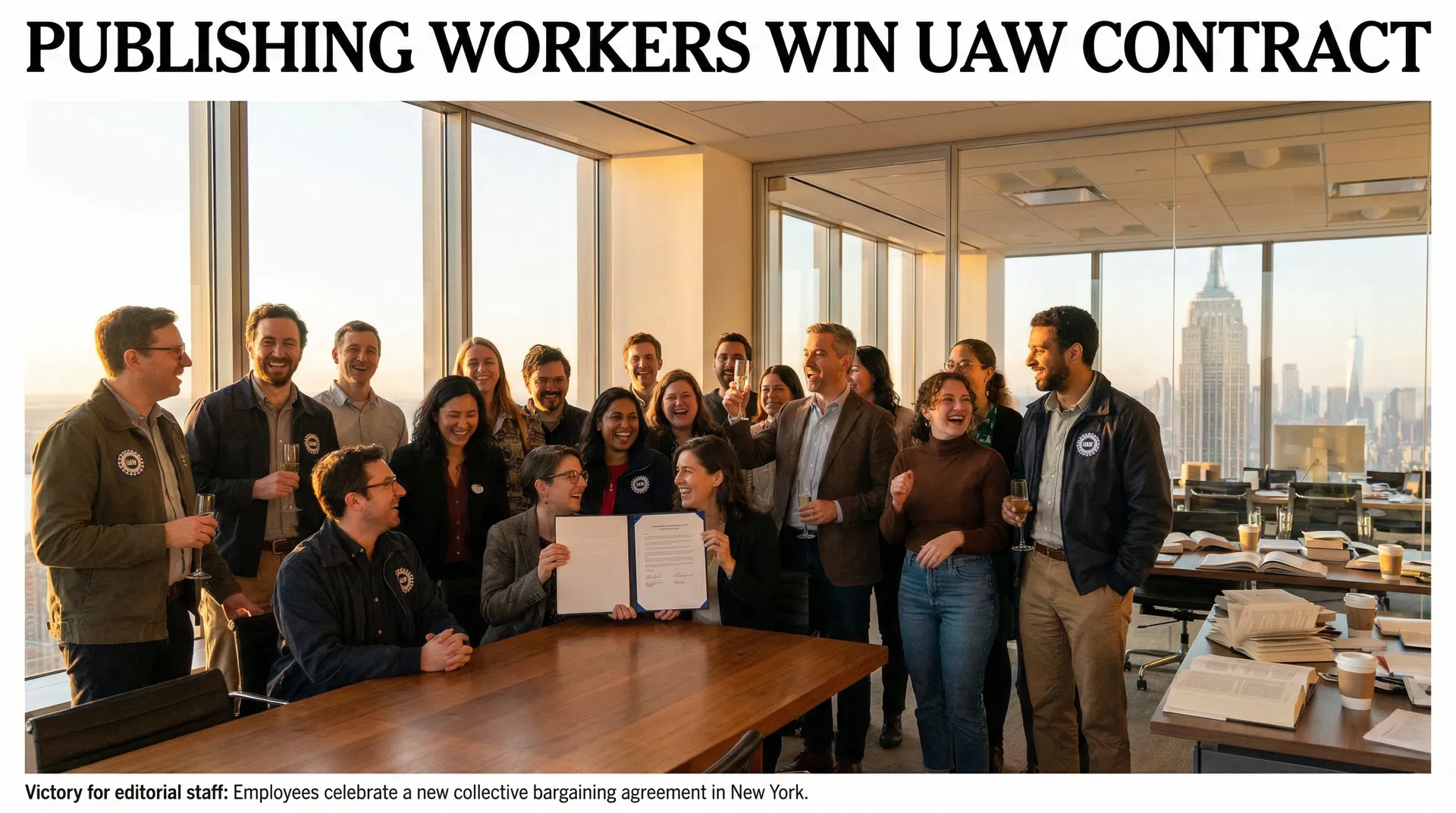
Workers in the Association of HarperCollins Employees, members of UAW Local 2110, have ratified a new three-year contract setting a starting salary of $52,500 — rising to $55,200 by 2028 — with overtime protections, improved parental leave, and ratification bonuses of $1,000 to $3,000. HarperCollins remains the only Big Five publisher with a union.
Analysis
The HarperCollins union contract ratification is a landmark moment for publishing labour, and its significance extends well beyond the walls of 195 Broadway.
The headline number — a $52,500 starting salary, rising to $55,200 by January 2028 — is meaningful in an industry that has long been notorious for entry-level wages that make New York City barely liveable. But the more consequential provisions are structural. All workers covered by the contract are now eligible for overtime pay for every hour worked over 35 hours per week, and early-career employees can work up to three hours of overtime weekly without prior supervisory approval. In an industry where unpaid overwork has historically been treated as a rite of passage, these protections represent a genuine shift in the employment relationship.
The contract also improves severance, parental leave, discipline procedures, and promotions, and expands the equal rights clause to further protect vulnerable workers from discrimination. Ratification bonuses ranging from $1,000 to $3,000 based on seniority bring total first-year compensation for the lowest-paid workers to $57,000.
The union's statement — that HarperCollins employees now have "one of the highest base pays in the publishing industry" — is a pointed reminder of how low that bar has historically been set. The Big Five have long competed for talent on the basis of prestige and access rather than compensation, a model that has increasingly failed to attract and retain people who cannot rely on family wealth to subsidise below-market salaries.
Sophia Kaufman, Harper associate editor and union steward, put it plainly: "Our union makes our jobs more sustainable. I hope publishing workers at other houses, agencies, and organizations are encouraged to organize their own workplaces." That call to action is the real story here. HarperCollins has been unionised for more than 80 years, but the other four members of the Big Five have not. As the cost of living in publishing's major cities continues to rise and AI-driven restructuring creates new anxieties about job security, the pressure to organise elsewhere in the industry is likely to intensify.