White House AI Framework Defers Copyright to Courts, Backs Collective Licensing
The White House released a four-page National AI Legislative Framework on March 20, declining to codify AI training as fair use and instead deferring copyright to the courts. It supports collective licensing frameworks and federal preemption of state AI laws.
Analysis
The Trump administration released its four-page National Policy Framework for Artificial Intelligence on March 20, 2026, and for publishers the most consequential line is what it declines to say.
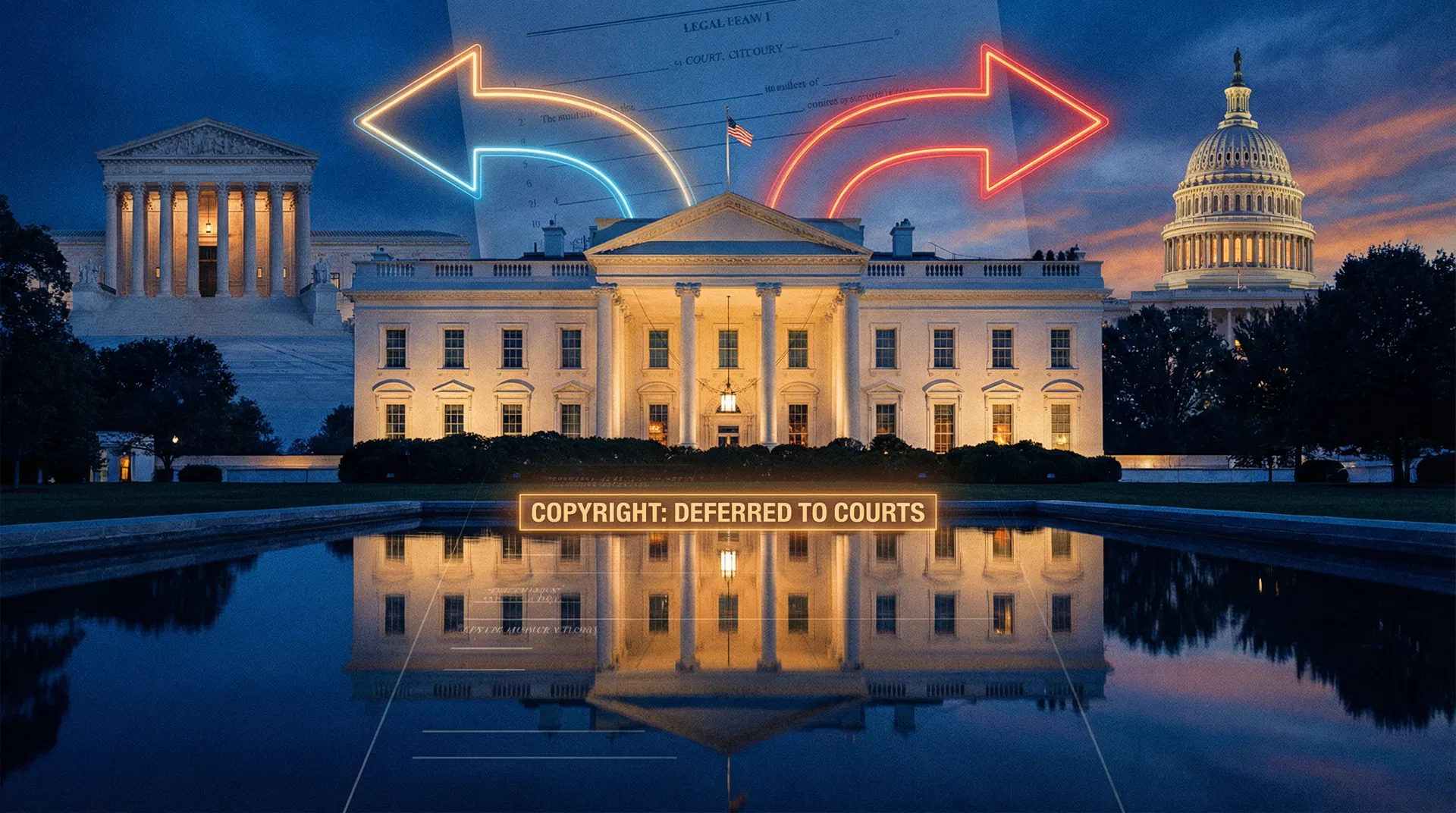
The framework covers seven areas — federal preemption of state AI laws, copyright, child safety, regulatory structure, energy, free speech, and workforce — but the copyright section is the one the creative industries have been watching most closely. The administration states that it believes AI training on copyrighted material is lawful. But rather than codify that position in legislation, it tells Congress to stay out and let the courts resolve the fair use question. It also expresses support for collective licensing frameworks that would allow rights holders to negotiate with AI companies without triggering antitrust liability.
This is a deliberate hedge. It preserves the administration's pro-AI posture while avoiding a direct confrontation with the creative industries at a moment when the Merriam-Webster and Encyclopedia Britannica lawsuits against OpenAI, the Grammarly class action, and a growing body of copyright litigation are all working their way through the courts. The support for collective licensing is the most publisher-friendly element of the framework — but without antitrust safe harbour legislation to give it teeth, it remains aspirational.
The framework also creates an immediate tension with Senator Marsha Blackburn's 300-page "TRUMP AMERICA AI Act" discussion draft, released just two days earlier. Blackburn's bill would declare AI training on copyrighted works categorically outside fair use — the opposite of the White House's court-deferral approach. The two documents also disagree on developer liability and Section 230. Congress is now pulling in opposite directions on the most consequential question for the publishing industry, and publishers will need to track both legislative tracks simultaneously while the courts continue to develop the case law.
For the industry's practical purposes, the framework changes nothing about existing compliance obligations. But it is a strong signal of the administration's intent: keep AI development federal, keep copyright in the courts, and use collective licensing as the pressure valve. Publishers who have been waiting for legislative clarity will need to wait longer — and invest more heavily in the litigation strategy that the framework has just confirmed is the primary arena.